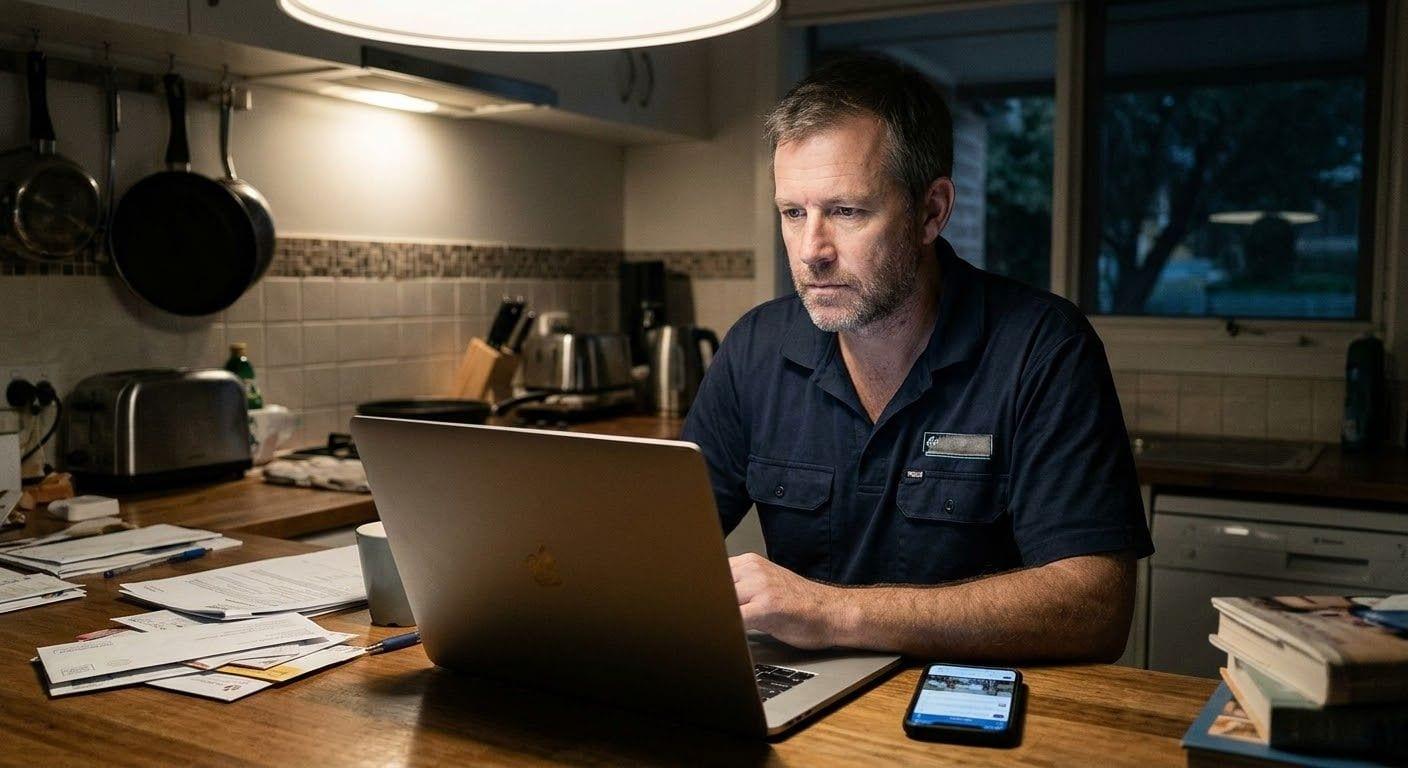
Trevor Nguyen, 44, a logistics coordinator from Box Hill, returned to LinkedIn in March after five years away from all forms of social media, intending to update his job title and get out within eleven minutes. "It's a noticeboard for work," he told himself, bookmarking the app and closing the tab.
By day three, Nguyen had left a single comment, under a post from a chief executive who credited his hiring philosophy to whether a job candidate returned their shopping trolley to the bay. Nguyen pointed out, politely, that this was not actually a valid predictor of anything. The comment received four likes and one reply, from a stranger, informing him that this was "a very negative mindset to bring into a professional space."
"I felt something change in the air," Nguyen said.
Over the following weeks, his feed reorganised itself around him. He began seeing posts from people who wake at 4am. A man who had been fired that morning and wanted everyone to know what it had taught him. A woman thanking her former boss for letting her go. Someone crying in a car park, photographed mid-promotion, captioned with a lesson about gratitude. Every post ended the same way: "Agree?"
Nguyen has now left sixty-one comments. Nine of them begin with the words "Respectfully, no." He checked his screen time for the first time in April and found he was spending two hours and forty-seven minutes a day on an app he had rejoined to change one line of text. "I don't even care about any of these people," he said. "I'm just aware that one of them is wrong."
In September, Nguyen posted that he was leaving the platform for good. It became his best-performing post of the year, reaching over fourteen thousand people and drawing several offers of "an honest conversation," one of which came from a leadership coach.
He has not left. He is staying, he said, to respond to the comments.