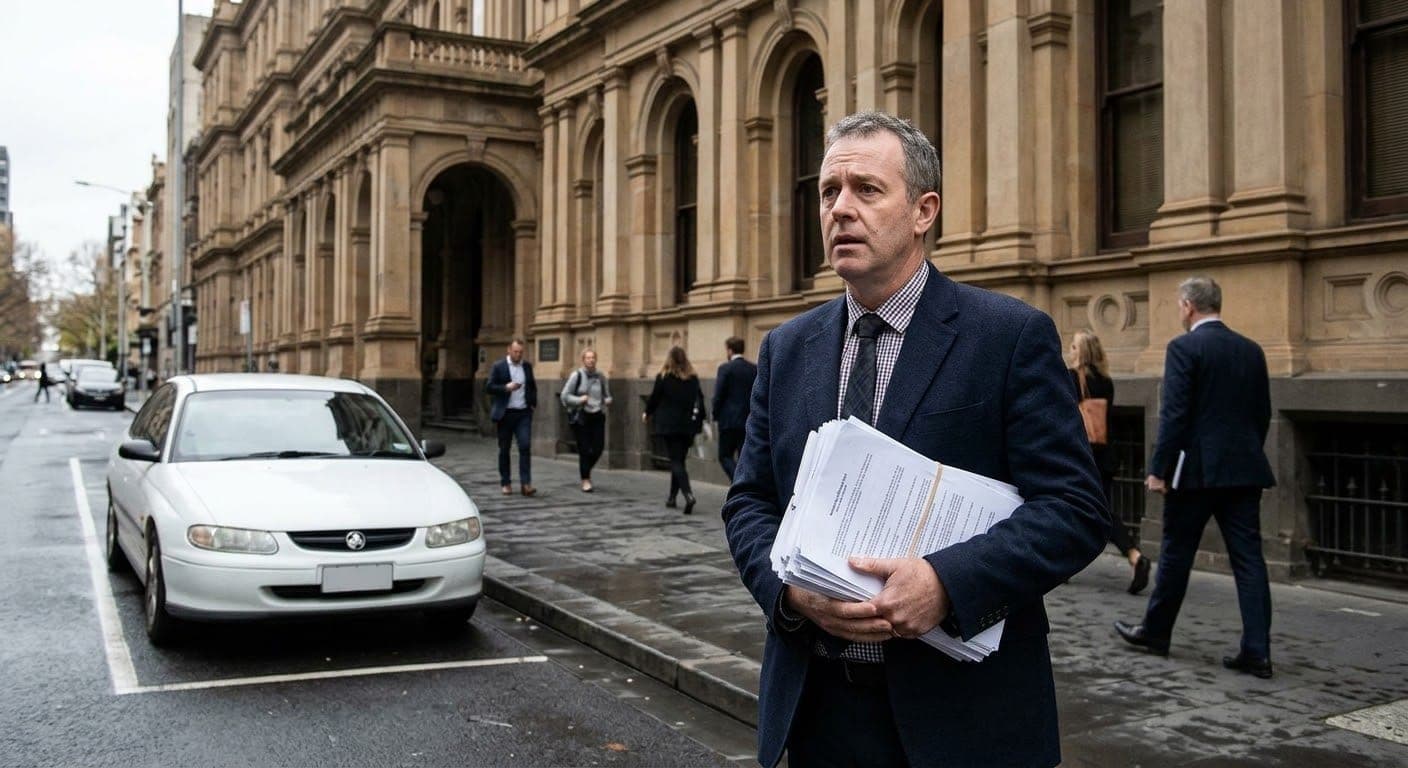
Robert Kaldis, 52, represented himself at the Melbourne Magistrates' Court on Tuesday over an unregistered-vehicle infringement, arguing in part that his Holden Commodore could not lawfully be impounded without, in his words, "the lawful judgment of my peers," a phrase drawn directly from Chapter 29 of Magna Carta, which remains, improbably, part of the law of Victoria.
Chapter 29, confirmed by Edward I in 1297 and carried into Victorian law via the Imperial Acts Application Act 1980, protects a "freeman" from unlawful imprisonment, dispossession, outlawry or exile except by lawful judgment of his peers or the law of the land, and provides that the Crown will not sell, deny or delay right or justice. It was written to restrain a king's officers from seizing land and liberty without process; it does not mention registration stickers, and has not, as far as court records show, previously been raised over one in this country.
Mr Kaldis, who found the clause after what he described as "a long night on the legislation website," told the court the impoundment amounted to dispossession without due process. The magistrate, according to a court spokesperson, confirmed for the record that Chapter 29 is indeed current Victorian law, noted this with what the spokesperson called "evident and genuine interest," and then explained that the clause's protection relates to imprisonment and the denial of access to courts, not to parking and registration enforcement, which operates under entirely separate and more recent legislation that Mr Kaldis's Commodore remained squarely subject to.
Mr Kaldis was ordered to pay the original fine in full, plus costs, but said afterwards he considered the morning a success regardless.
"Nobody in that courtroom thought I was right, but nobody could tell me I was wrong about the law existing," he said, standing outside the court on William Street. "That clause is older than this country, older than this court, older than the car. I'll take that."
He said he has since read the whole of the Imperial Acts Application Act "for interest" and has identified what he believes is a second usable clause, which he declined to specify, for a related matter he said is "still before the courts and best left there for now."