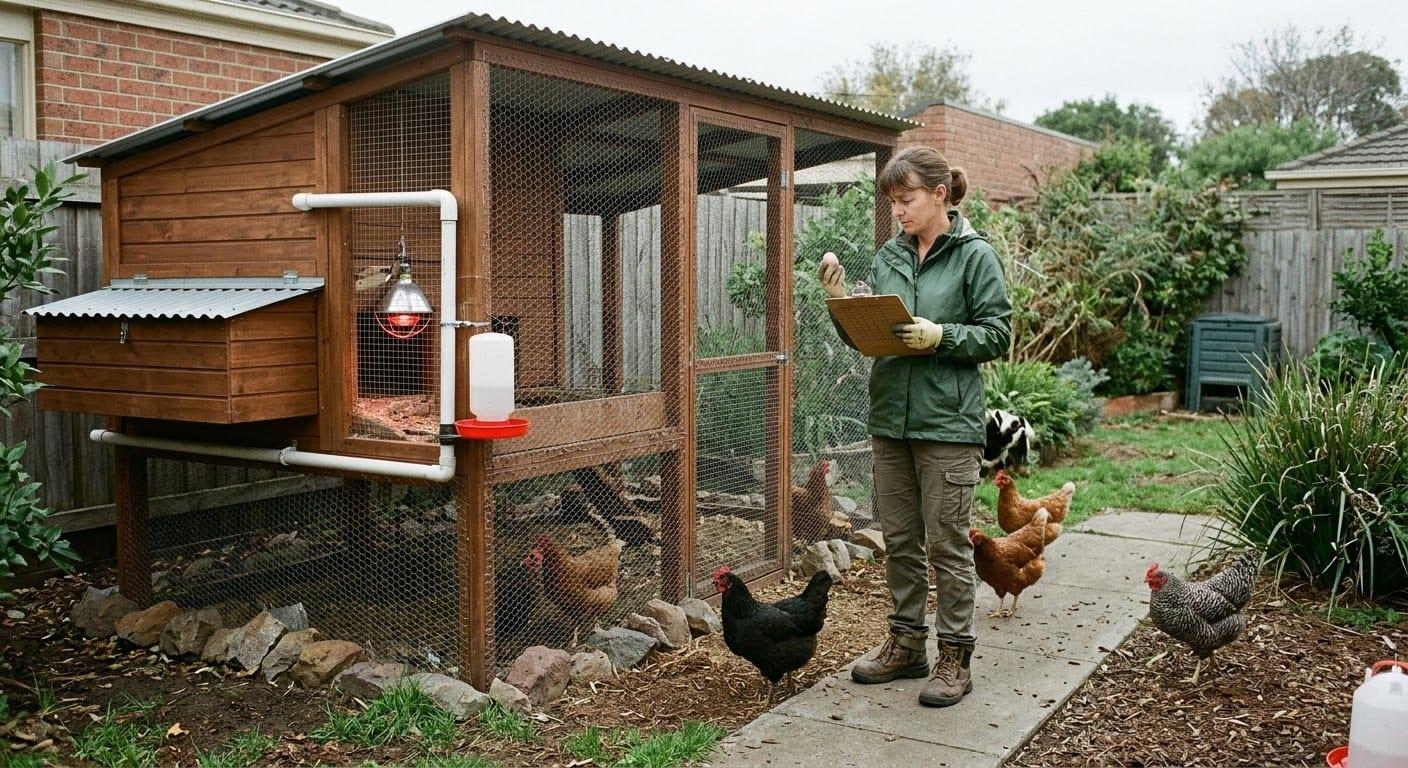
The Walsh family's hens arrived eighteen months ago as a cost-saving measure, a logic that held for approximately six weeks. Since then, the flock in the back corner of their Reservoir block, near the lane behind Broadway, has acquired a thermostatically controlled coop heater for winter, a predator-proof run with buried mesh skirting after a fox incident nobody in the family will fully describe, and a feed regimen that has quietly migrated from the produce store on Edwardes Street to a specialty supplier that sells fermented grain blends in resealable paper sacks.
"We were trying to get away from supermarket eggs," said Carol Walsh, who keeps a running spreadsheet she no longer shows her husband. The spreadsheet currently puts the cost of each egg, averaged across feed, bedding, vet visits and what she now refers to only as "the heater situation," at just under eleven dollars. A dozen eggs at the supermarket two streets over costs seven dollars and forty cents, and nobody has to administer anything by syringe.
The latest expense is pet insurance, specifically for poultry, a product Carol did not know existed until one of the hens, Mavis, developed a limp that an online forum diagnosed as either bumblefoot or nothing, and which a $240 vet visit confirmed was, in fact, nothing. Carol has kept the receipt. She has also kept Mavis, who has since recovered and lays, on average, one egg every four days.
Asked whether the family has considered simply buying eggs, Carol said the hens were "not really about the eggs any more," a sentence she delivered while refilling an automatic waterer that cost more than the hens did.
The Walshes have no plans to stop. They are, in fact, considering a second coop, for two more hens, on the grounds that six is "not quite enough for the household," a claim that becomes harder to evaluate once you learn the household currently produces roughly one and a half eggs a day and eats, by Carol's own count, considerably more than that.